
The Zero Trust Bitcoin Platform
A secure Bitcoin-first platform on a zero trust architecture, enabling native BTC dApps with complete user control.
00
Days
00
Hours
00
Minutes
00
Seconds
Our Vision
We're Hiring
Unleash Bitcoin. Go Native.
FAQs
Architecture
Native has a long-term strategy to transition to a modular architecture, including selecting a Data Availability (DA) provider. For the mainnet launch, we prioritize the battle-tested, market-leading Cosmos Stack to create a byzantine fault-tolerant replicated state machine for the Bitcoin Application Layer.
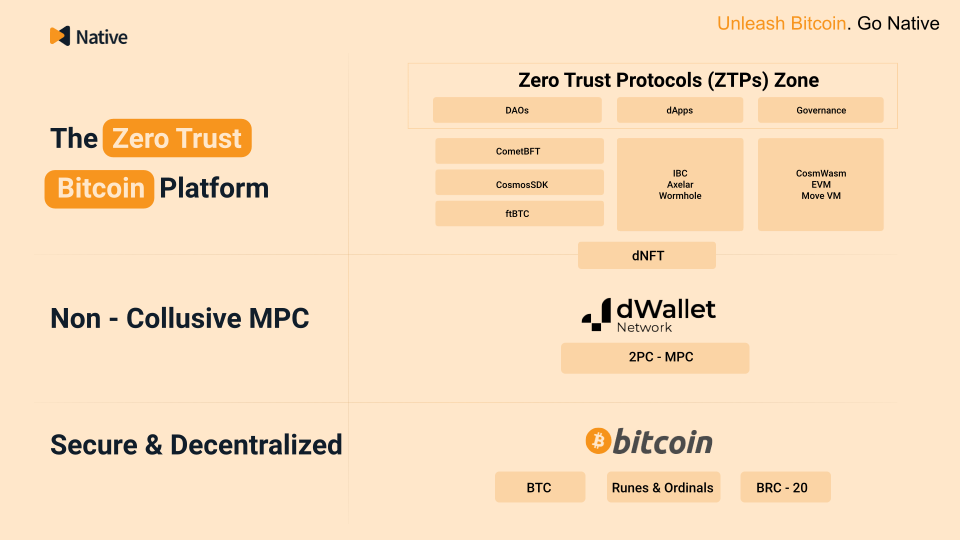 More details for the tech stack can be found in the whitepaper.
Yes, it's "natively" supported.
Staking will be available at the mainnet launch. However, using native BTC for PoS security and governance features will be implemented later based on adoption.
ftBTC
- The best trust-minimized BTC gateway to other chains and existing DeFi applications (Uniswap, Aave, Jupiter…)
- BTC volumes through Native
- Eliminates centralized and custodial wrapped BTC
- Provides a decentralized solution for BTC DeFi
- Further integrations will allow liquid and fungible tokens to be integrated into Native smart contracts outside of the Zero Trust Zone
- Use in non-zero trust dApps on Native, including forks like Uniswap
- Bridge it to other chains as a fungible token (via IBC, Axelar, Wormhole)
- Support dWallet adoption
wBTC is centralized and custodian. It’s operated by the BitGo exchange, which is regulated in the US. ftBTC is secure, decentralized, and non-custodian.
No, ftBTC is designed for use with IBC or other non-zero trust dApps.
Withdraw fees and supply bonuses may be applied to incentivize a wide range of available BTC denominations. There are no direct fees for using ftBTC except standard transaction fees.
Additional Questions
They will be inherited from the Cosmos SDK token standards: x/bank and x/nft modules.
Native is permissionless and can integrate with other Bitcoin L2s.
Yes. Stablecoins can be bridged to Native from other ecosystems. We’re also looking into supporting projects that want to create stable coins, such as Zero Trust Protocols.